
Our commercial lease solicitors for warehouses negotiate industrial premises leases that protect your storage capacity, safeguard your logistics operations, and give your distribution business the secure property foundation it needs to thrive across England and Wales. From single-unit trade counter warehouses and last-mile delivery hubs to large-scale national distribution centres, we understand what makes a warehouse lease work and where the hidden risks sit.
A warehouse is not simply four walls and a roof. It is the operational heart of your supply chain, where inventory accuracy drives customer satisfaction, where dispatch efficiency determines your delivery promises, where loading bay throughput defines your capacity to scale, and where your capital is tied up in racking, mezzanine floors, material handling equipment, and fit-out that you cannot simply unbolt and take with you at lease end. Our commercial property lease solicitor team brings over 10 years of specialist experience to every warehouse lease transaction.
A poorly negotiated warehouse lease can erode your margin as steadily as rising energy costs or driver shortages. From floor loading capacity for heavy racking and forklift truck access to eaves height for vertical storage, yard depth for HGV manoeuvring, and power supply for charging electric forklift fleets, every detail matters. Our commercial lease solicitor team ensures your warehouse lease supports your operations rather than confining them.
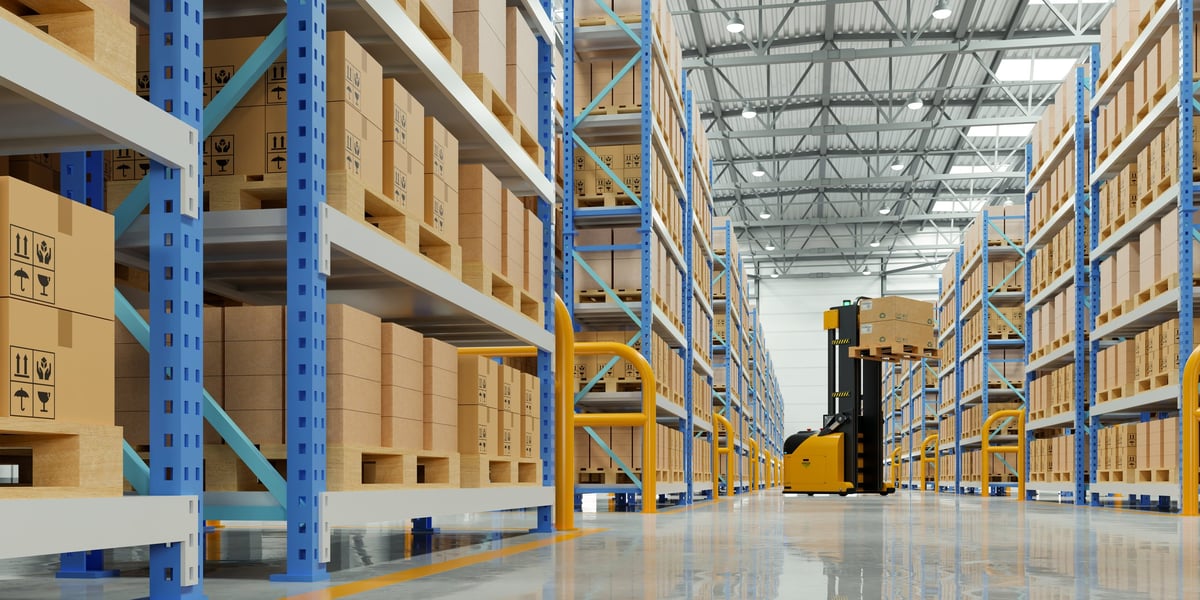
A warehouse must function as a high-efficiency storage and distribution facility where inventory moves seamlessly from goods-in through put-away, order picking, and dispatch, as a safe working environment where forklift drivers, pickers, packers, and delivery teams operate without risk, and as a commercially viable asset where your logistics operation, storage revenue, and distribution contracts deliver sustainable returns. Our commercial property lease solicitor team understands the unique intersection of industrial operations, health and safety regulation, and property law that warehouse operators, logistics directors, and supply chain managers navigate every day.
When you are taking on new warehouse or industrial premises, our commercial lease solicitor team negotiates terms that protect your logistics business from day one. We secure rent-free periods to cover your fit-out costs including mezzanine floor installation, racking systems, dock leveller installation, office partition construction, lighting upgrades, and CCTV installation. We negotiate permitted use clauses covering the full scope of your warehouse operations, from bulk storage and order fulfilment to cross-docking and light assembly, plus break clauses aligned with your distribution contract cycles. Whether you are a third-party logistics provider entering a new region, an e-commerce fulfilment business scaling to meet demand, or an established manufacturer expanding your distribution network, we ensure the lease supports your commercial ambitions.
If your current warehouse or industrial unit lease is approaching its contractual end date, our commercial property lease solicitors handle the renewal process under the Landlord and Tenant Act 1954. We negotiate updated terms that reflect your logistics business's current trading position, whether that means securing additional floor space for expanded storage operations, adjusting the rent to current industrial property market conditions, or negotiating a break clause that gives you flexibility as your distribution contracts evolve. We understand that a warehouse location, established transport links, and the operational goodwill built through years of reliable logistics service represent assets that must be protected.
As your logistics operation evolves, you may need to install new mezzanine floors, add extra loading docks, reconfigure racking layouts, or upgrade your warehouse management system infrastructure. Our licence to alter solicitors negotiate landlord consent for warehouse improvements and handle lease variation agreements that formalise changes to your occupancy terms, ensuring your industrial premises keeps pace with your operational development and growth in storage capacity requirements.
When buying or selling a warehouse or logistics business, the lease assignment and transfer process is critical. Our commercial lease solicitors for warehouses manage the legal transfer of the lease from the outgoing warehouse operator to the incoming buyer, dealing with landlord consent requirements, authorised guarantee agreements, and the release of outgoing tenant liabilities. We ensure a smooth transition that protects both parties and keeps the warehouse operating without interruption, preserving supply chain continuity, stock integrity, and staff retention.
Industrial estates and multi-let warehouse parks often carry significant service charges covering estate roads, communal loading areas, security, lighting, drainage, and waste management. Our rent and service charge solicitors challenge unreasonable landlord demands, negotiate fair rent review settlements, and ensure service charge costs are transparent and proportionate. For warehouse premises, yard maintenance, security patrols, CCTV monitoring, and waste disposal are substantial costs that our solicitor team scrutinises carefully during lease negotiations and rent review processes.
Whether you are relocating to larger warehouse premises, consolidating distribution centres, or restructuring your logistics operations, our lease exit options solicitors help you navigate break clause exercise, negotiated lease surrender, or assignment to another logistics operator. We ensure your exit is legally clean and financially efficient, with no residual dilapidations or repair liabilities left behind to erode your balance sheet.
A warehouse or industrial unit lease is fundamentally different from an office, retail shop, or hospitality premises lease. The operational demands, property specifications, and financial risks are unique, and your legal advice must reflect that.
Your warehouse lease must accommodate the physical demands of your storage operations. Our commercial lease solicitors ensure the lease permits the installation of heavy racking systems, verifies that the floor slab loading capacity matches your operational requirements, confirms adequate eaves height for vertical storage, and addresses any restrictions on mezzanine floor installation that could limit your storage density. A standard commercial lease will not automatically cover these industrial property considerations.
The operational efficiency of your warehouse depends on transport access. Our solicitor team negotiates lease terms that protect your loading bay configuration, secure adequate yard depth for HGV turning circles and trailer parking, address shared access roads and service yard maintenance obligations, and verify that delivery hours are not restricted in a way that conflicts with your logistics schedules. Without express provisions, a landlord could restrict access that is critical to your distribution operation.
Modern warehouses increasingly depend on substantial electrical capacity for automated storage and retrieval systems, conveyor networks, cold storage, electric forklift charging, and office areas. Our commercial lease solicitors ensure your lease permits electrical infrastructure upgrades, clarify whether the cost of supply upgrades falls to landlord or tenant, and negotiate express rights to install EV charging points for your delivery fleet. An inadequate power supply can cripple warehouse productivity.
Warehouse fire safety compliance is complex, involving sprinkler systems, compartmentation, fire detection, and evacuation routes. Insurers impose increasingly stringent requirements on warehouse occupiers regarding stock density, racking configuration, and fire suppression. Our solicitor team negotiates lease provisions that fairly allocate responsibility for fire safety compliance between landlord and tenant and ensures your insurance obligations under the lease do not conflict with what is commercially obtainable in the warehouse insurance market.
Under a Full Repairing and Insuring warehouse lease, the tenant may bear responsibility for the roof, structural frame, cladding, and even the floor slab. These are substantial financial commitments over a lease term of ten to twenty-five years. Our commercial property lease solicitor team negotiates repair obligations that are proportionate, secures schedules of condition to limit future dilapidations liability, and where possible, shifts responsibility for inherent structural defects back to the landlord. For warehouse premises, failure to limit repair exposure can result in six-figure dilapidations claims at lease expiry.
Warehouse permitted use clauses must be drafted with precision. Bulk storage and distribution centre operations typically fall under B8 (Storage or Distribution). If your warehouse includes light assembly, manufacturing, or a trade counter, these may fall under B2 (General Industrial) or E (Commercial, Business and Service). Our commercial lease solicitors ensure the permitted use clause in your lease precisely matches your actual business operation, and that the premises have valid planning permission for the uses you intend to carry out.
We follow a structured four-stage process for every warehouse lease transaction, ensuring no detail is overlooked and your industrial property interests are fully protected at every stage.
We begin with a thorough review of your warehouse lease documentation, heads of terms if drafted, and a detailed discussion about your logistics operation. Our commercial lease solicitor identifies the key risks, opportunities, and negotiation priorities specific to your warehouse needs. Whether you are a tenant taking a new industrial unit or a landlord preparing a lease for a warehouse development, we provide a clear written assessment of the legal position and our recommended strategy.
Our solicitor team conducts a detailed legal review of the proposed warehouse lease, examining every clause from permitted use and repair obligations to rent review mechanisms and reinstatement requirements. We verify planning consent for B2 and B8 uses, check rights benefiting and burdening the property, confirm service charge provisions, and assess insurance obligations against what the warehouse insurance market actually offers. This stage produces a comprehensive report highlighting risks, negotiation points, and recommended amendments.
We take the lead in negotiations with the other party's legal representatives, presenting proposed lease amendments clearly and commercially. Our commercial lease solicitors negotiate robustly on the points that matter to your warehouse operation: floor loading warranties, loading bay access rights, power supply upgrades, repair obligations, break clause conditions, rent review assumptions, and reinstatement requirements at lease expiry. We keep you updated throughout, explaining the commercial implications of each negotiation point so you make informed decisions.
Once terms are agreed, our solicitor team handles the legal completion process, ensuring all documentation is properly executed, any conditions precedent are satisfied, and the lease is registered where required. We provide a completion summary highlighting key dates, break clause deadlines, and rent review intervals. Our relationship does not end at completion. We remain available for ongoing lease compliance queries, rent review negotiations, lease renewal advice, and exit strategy planning throughout the life of your warehouse lease.
Understanding which lease structure best suits your warehouse or industrial operation is essential. Our commercial lease solicitor team advises on all the following lease arrangements and helps you select the right one for your operational and commercial needs.
| Lease Type | Typical Term | Best Suited For | Key Consideration |
|---|---|---|---|
| Full Repairing and Insuring Lease (FRI) | 10 to 25 years | Established warehouse operators and logistics companies seeking long-term security with full control over their industrial premises | Tenant bears all repair, insurance, and maintenance costs including roof, structure, cladding, and floor slab. Our commercial lease solicitors negotiate caps and carve-outs for inherent structural defects to limit your exposure. For warehouse premises, FRI repair obligations are particularly significant given the extensive structure of industrial buildings and the cost of roof and cladding replacement over long lease terms |
| Internal Repairing Only Lease (IRI) | 5 to 15 years | Warehouse operators in multi-let industrial estates or business parks where the landlord retains structural and external responsibility | Landlord retains structural repair responsibility including roof, external walls, and service yard. Our solicitor team ensures service charge provisions are transparent and capped, with particular attention to estate road maintenance, security costs, and waste management charges that can escalate significantly on multi-let industrial estates |
| Lease Protected by the Landlord and Tenant Act 1954 | Variable, typically 5 to 15 years | Warehouse operators that want security of tenure and the right to renew at the end of the term, protecting their logistics infrastructure investment and established transport links | Provides statutory renewal rights. Our solicitors for Landlord and Tenant Act 1954 advise on protecting and exercising these rights for warehouse and industrial premises |
| Lease Excluded from the 1954 Act | Variable, typically 3 to 10 years | Start-up logistics businesses, short-term overflow warehousing, or trial locations where flexibility is prioritised over long-term security | No automatic renewal right. Our commercial property lease solicitors ensure you fully understand the implications before agreeing to exclude security of tenure from your warehouse lease. A contracted-out warehouse lease places the entire renewal risk on the tenant at lease expiry |
| Short-Term Flexible Warehouse or Storage Licence | 6 months to 3 years | E-commerce seasonal peak warehousing, project-specific storage, or logistics companies testing a new geographic market before committing to a longer lease | Lower commitment but significantly less control. Our solicitors review short-term warehouse agreements and licence to occupy agreements for hidden restrictions, unfair cost allocations, and operational limitations that could disrupt your logistics function |
Not sure which lease type suits your warehouse or industrial operation?
Discuss Your Warehouse Lease RequirementsWe have answered the most common questions warehouse operators, logistics directors, and industrial property investors ask our commercial lease solicitor team about warehouse lease transactions.
Whether you are taking on new warehouse premises, renewing an existing industrial lease, negotiating a lease assignment for a logistics business, or facing a dilapidations claim at warehouse lease expiry, our commercial lease solicitor team is ready to help. We provide clear, commercially focused legal advice that protects your warehouse operations and your bottom line.
Serving warehouse operators, logistics businesses, and industrial landlords across England and Wales
Every warehouse lease situation is different. We offer a free, no-obligation initial consultation to discuss your industrial property lease requirements and provide a clear, written fee quote for the work involved. There is no pressure and no commitment required.